Author: admin

  • 地震中的伊斯坦布尔 2023

    Istanbul 2023 in the earthquake

    Istanbul One-Day Tour 2023.Feb.16

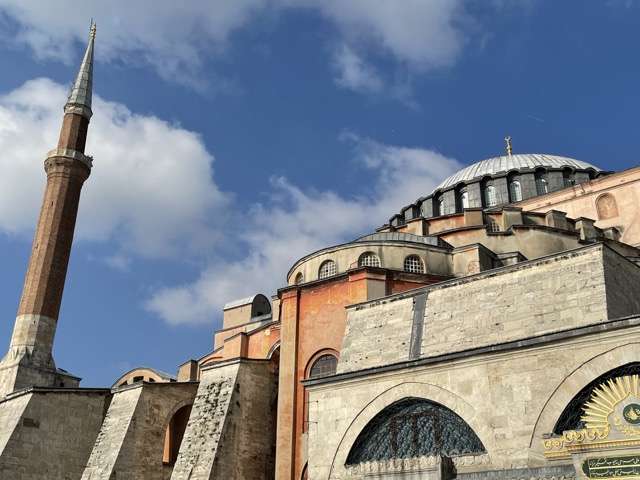
    Turkey, a cat-friendly destination, spans the Eurasian continent. With a view of the Spruce Strait, you can fully enjoy the former splendor of Constantinople. Although it is only a short day, you can deeply feel the unique characteristics of this place: no other corner of the world can compare with this place. You can listen to the deep call of prayer from the minaret on the top of the ancient city, and enjoy the endless lively shouts of street vendors. This is a place full of vitality and rhythm, and every sound tells the unique story of this city.
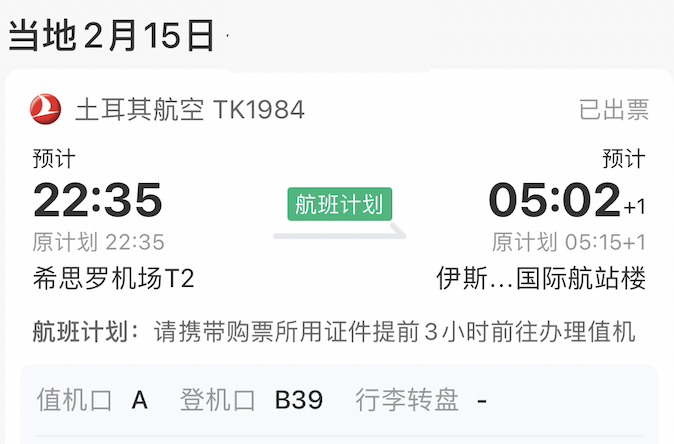
    Heathrow Airport, London, UK 2023.Feb.15

    Before takeoff

    I arrived at the airport a few hours early and sat quietly in a Chinese tea restaurant. I sat there alone, enjoying the busy scene of tourists around me. I enjoyed the lively atmosphere of people coming and going, especially those tourists who were dragging large and small bags and whose boarding time was about to end.
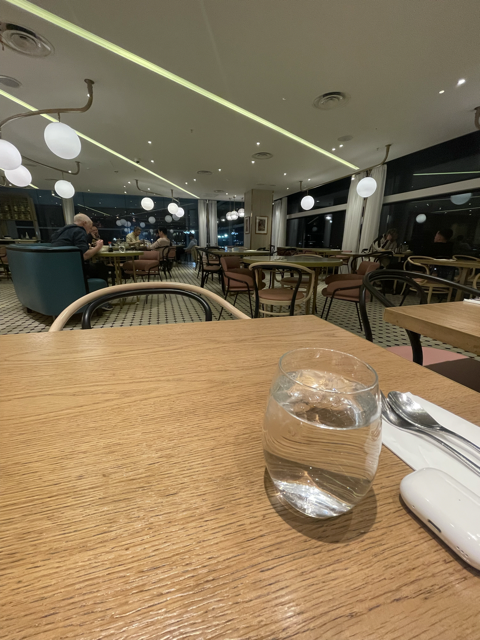
    I ordered a "Chicken Noodles in Superior Soup". I had not had chicken noodle soup in the UK for half a month, so I was looking forward to it. However, after ordering, I suddenly remembered that I would be back in Hong Kong in less than 30 hours. This made me wonder, since I was about to return to the paradise of food, was it really necessary for me to taste this unauthentic Chinese dish here?
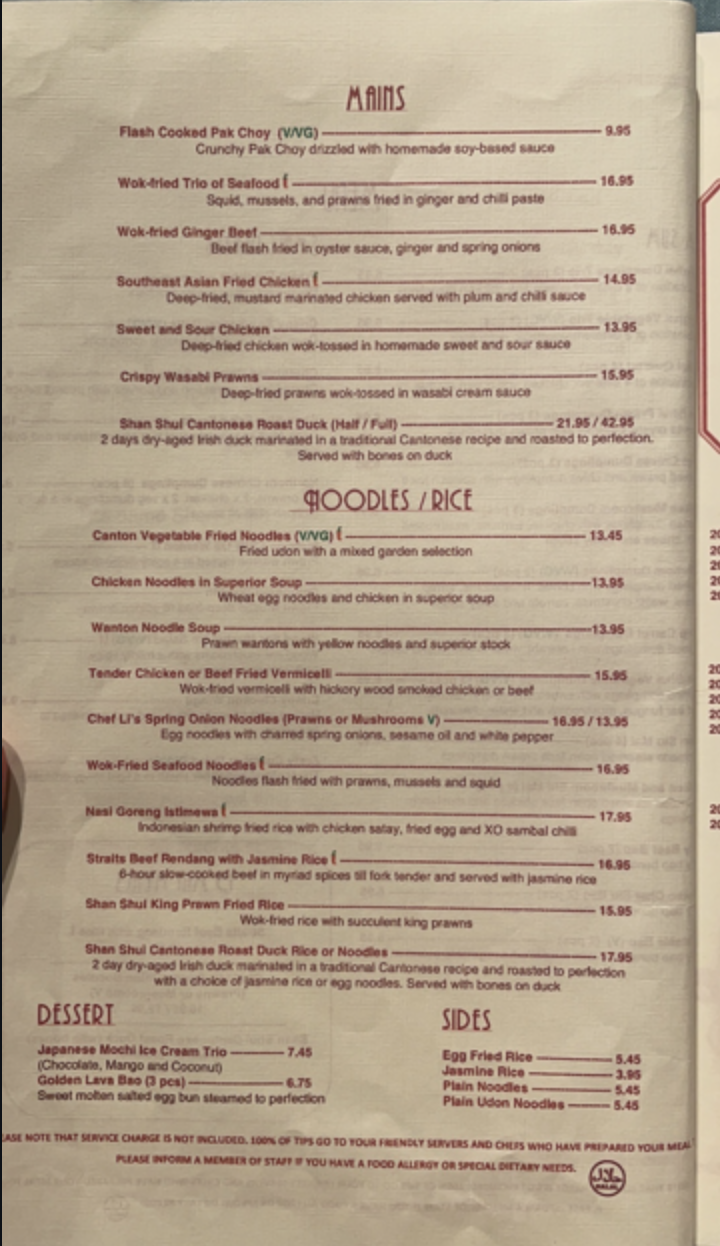
    Compared to Sanmao's "Chicken Soup for Rain", this one is just average. I can't help but feel sorry for my wallet. It's just a few noodles, a spoonful of water, and a few pieces of chicken. Compared to what I make myself (which can be called art), it's still far behind.
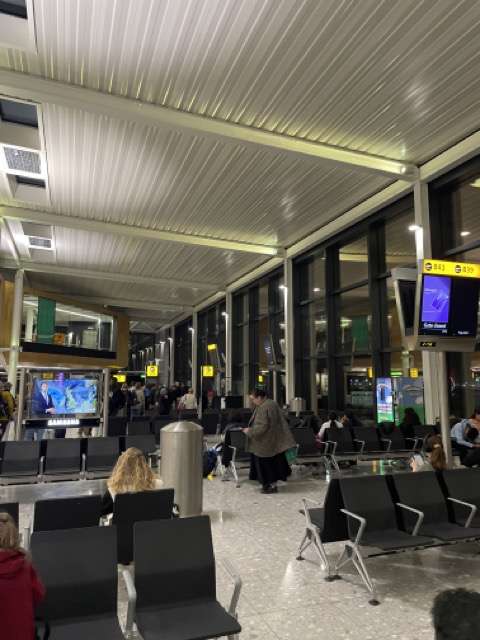
    Istanbul, Türkiye 2023.Feb.15

    No Internet

    Arrived at the airport at 5:00 a.m. local time. There is nothing more pleasant than seeing a city for the first time in the morning.
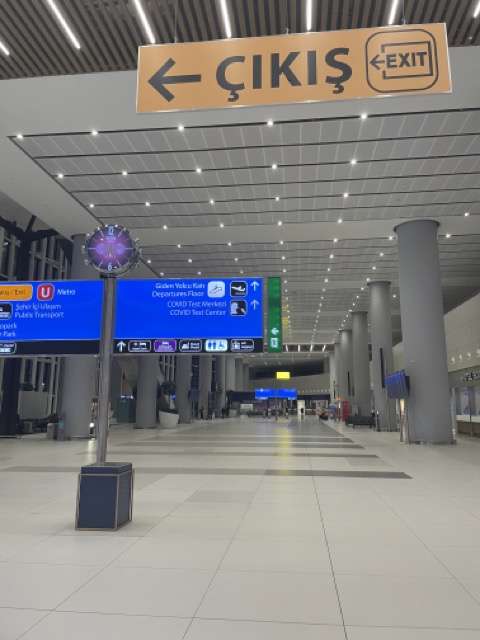
    However, this happiness did not last long. As a "new age, new youth", the first task after getting off the plane was to connect to the Internet. However, before departure, I forgot to buy a data package, which resulted in my phone being unable to access the Internet. So, I turned my attention to the airport's Wi-Fi.

    I have stayed in airports of different sizes, such as Paris, Rome, and London, and I have a deep understanding of the reliability of airport Wi-Fi. However, the Wi-Fi at the Turkish airport gave me a new understanding of Wi-Fi at international airports. Before I left, I had learned that Istanbul Airport Wi-Fi was only allowed to be used for one hour. However, what was even more surprising was that when I connected to Wi-Fi, I actually needed to enter a mobile verification code! My phone was unable to access the network at the moment, so how could I receive text messages?

    I tried to send verification codes over and over, but never received any response. Like a headless fly, I rushed around the airport, encountering the troubles that the airport staff were already accustomed to. They responded to me with a helpless expression. The dazzling array of Wi-Fi names and the embarrassing situation of not being able to access the Internet formed a sharp contrast, making me more and more anxious. The happiness just now had long disappeared, replaced by a sense of anxiety and helplessness.

    In this busy airport, I seemed to be the only one. The crowds around me, the busy schedule, the brightly lit terminal, everything seemed to have nothing to do with me. I was just a traveler lost in the online world, facing this huge airport alone.

    As the saying goes, "When God closes a door for you, he will definitely close a window for you." When I almost lost hope, I suddenly saw a "Wi-Fi self-service machine." It is said that you can enjoy one hour of Wi-Fi service by just scanning your passport. I don't know why, I looked around at first, trying to stay calm, for fear that others would notice my anxiety because I couldn't access the Internet.

    However, when I carefully put my passport into the machine, I found that the machine did not respond at all. I muttered helplessly in my heart: "This Turkish machine is really bad." At the same time, a green passport holder next to me easily took out the Wi-Fi account and password from the machine, which made me even more unacceptable. Obviously, the problem was not with the machine, but with my passport that could not pass the verification.

    I had no choice but to give up. It had been an hour since I got off the plane, so I quickly went out of the country and found the "touristanbul" window to register for a one-day tour.

    On the way, I saw another Wi-Fi self-service machine that I loved and hated. However, to my surprise, it actually worked this time. After getting the Wi-Fi account and password, I immediately turned on the network and finally reconnected with the Internet. At that moment, I felt relieved.

    At this moment, the first ray of sunlight slowly penetrated the window and filled the entire airport. The warm yellow light brought new hope and vitality, and the haze in my heart was instantly dispelled. At this moment, my trip to Turkey officially kicked off.
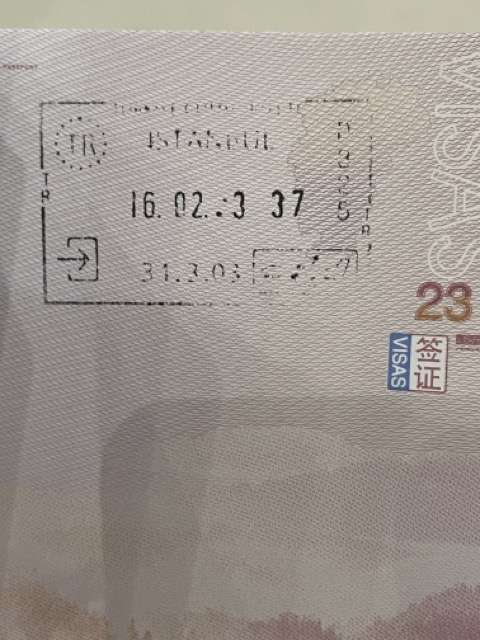
    About the touristanbul project

    This one-day tour project is led by Turkish Airlines and is mainly aimed at passengers who take Turkish Airlines and whose transfer time at Istanbul Airport is more than 6 hours but less than 24 hours. Due to the impact of the epidemic, the project was suspended for a time and will not reopen until February 2023.

    Passengers can choose a free one-day tour of Turkey at different time periods according to their own schedule. Since my next flight was at 1:00 a.m. the next day, the guy at the counter arranged the longest "T11 route" for me.
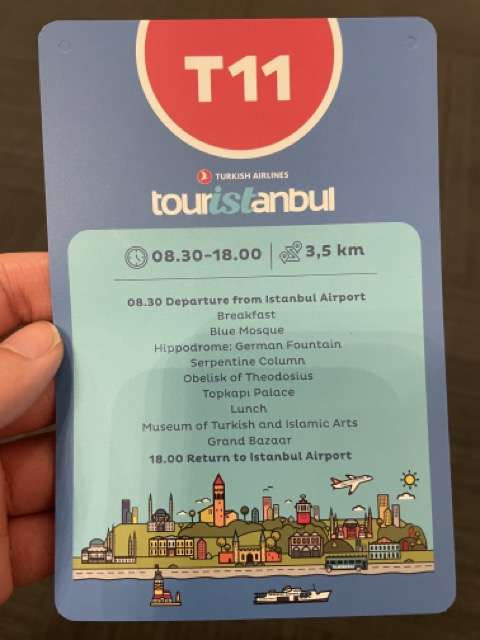
    Turkey earthquake on February 7, 2023

    In the early hours of Monday, February 7, 2023, two severe earthquakes occurred in succession in southeastern Türkiye near the Syrian border.

    According to reports that day, more than 5,000 people were killed in the disaster and thousands were injured. The World Health Organization warned that the death toll could increase to eight times the initial statistics. By February 10, the death toll had exceeded 20,000 - including at least 17,674 deaths in Turkey, which has exceeded the death toll of any strong earthquake in the country's history.
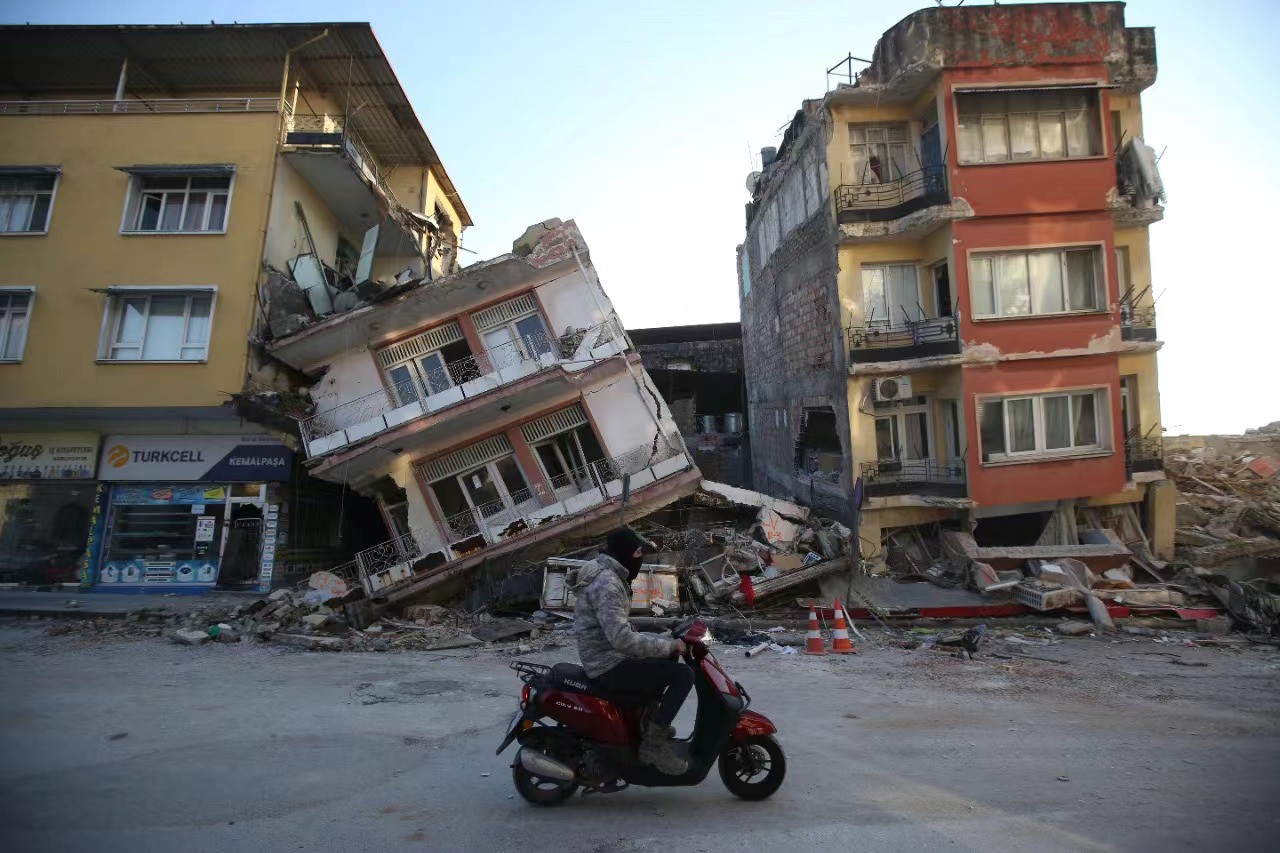
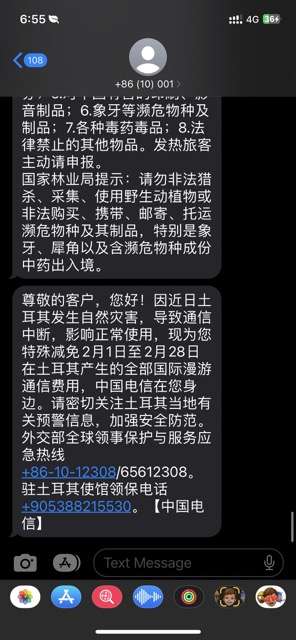
    After boarding the tour bus, the tour guide expressed deep gratitude to us foreign tourists, thanking us for supporting Turkey in this difficult time. Many tourists donate to Turkey spontaneously every day. Although the earthquake did not affect Istanbul, countless Turkish people lost their lives in this disaster. Unexpectedly, China Telecom also announced that it would waive all our network fees in Turkey.
    Let's go! Let's go!

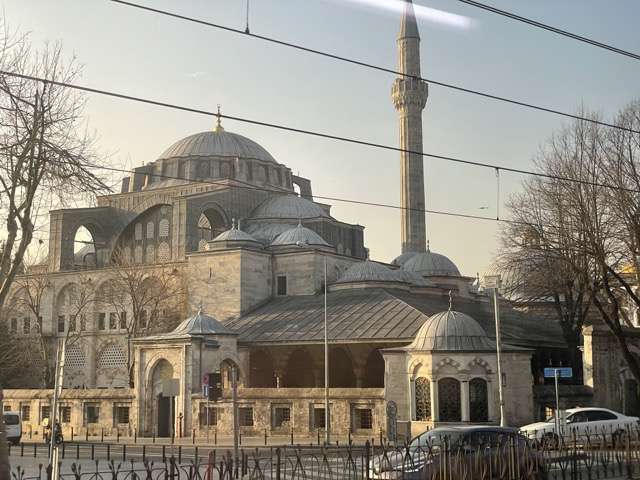
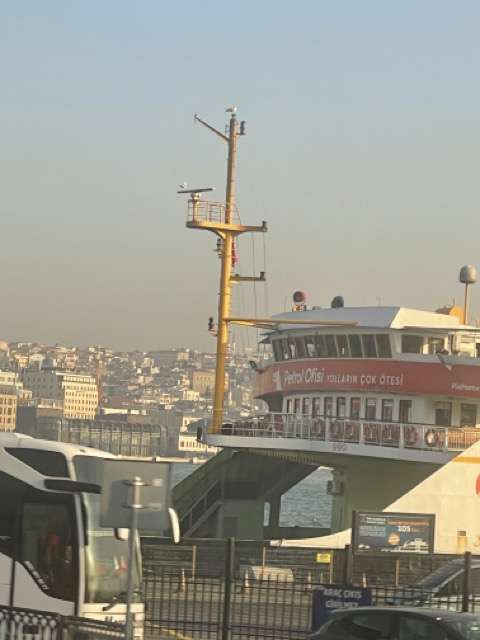
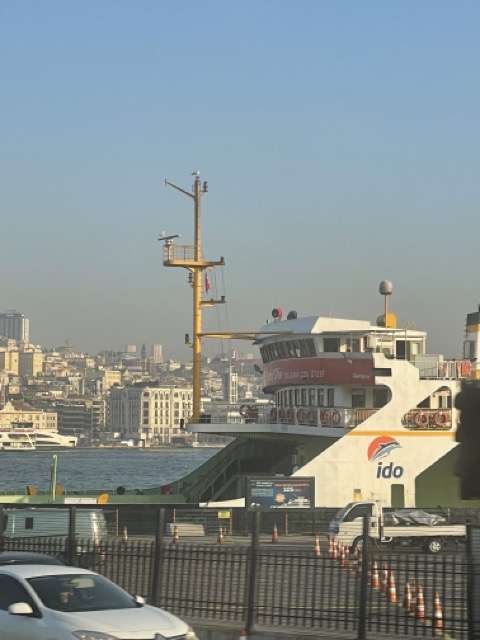
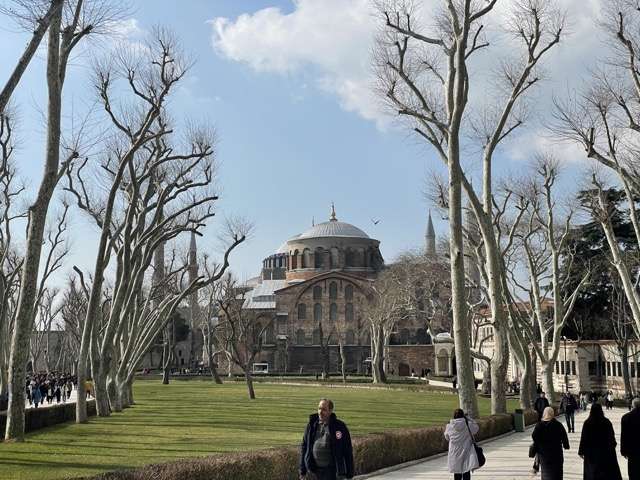
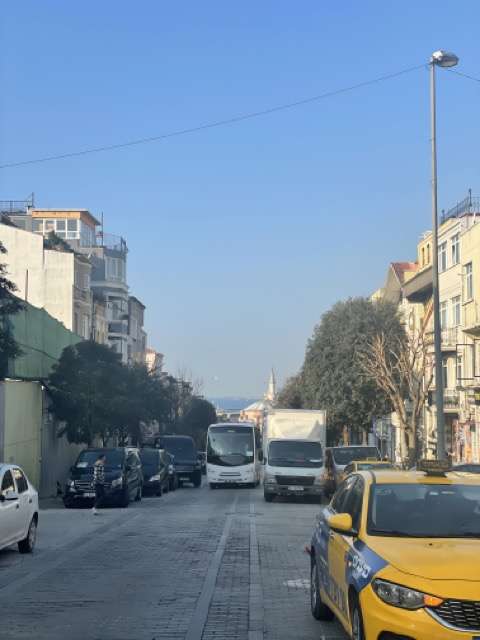
    It was February 16, 2023, at 9 o'clock in the morning, heading to the city center in the first rays of sunlight in Turkey. Here are some photos taken in the car.
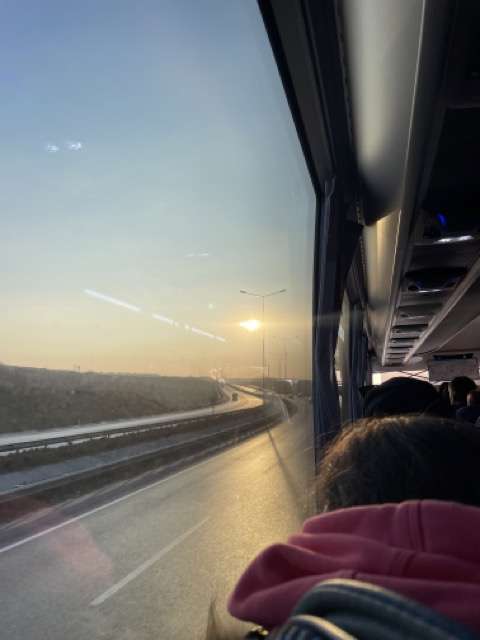
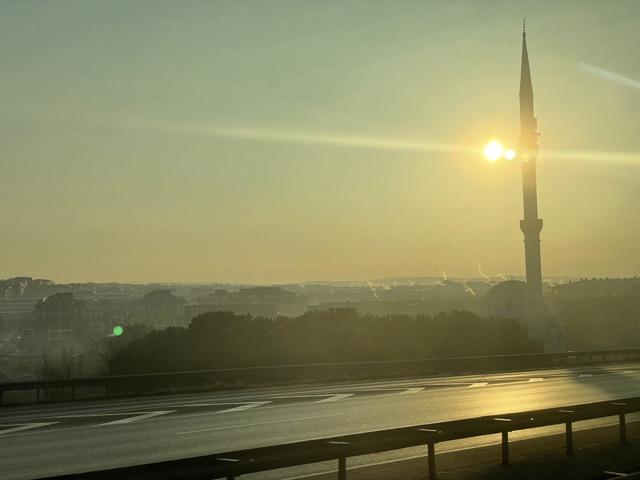
    It was shot in the car.
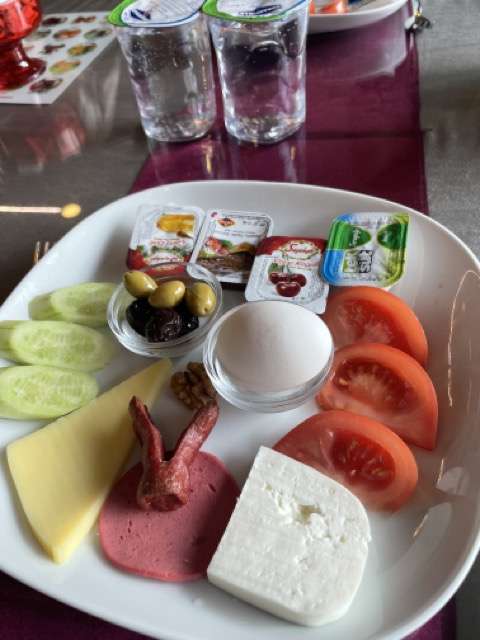
    Finally got off the plane, and our first meal in Turkey was provided free of charge by Turkish Airlines.

    Although it doesn't look good, it doesn't taste good either.
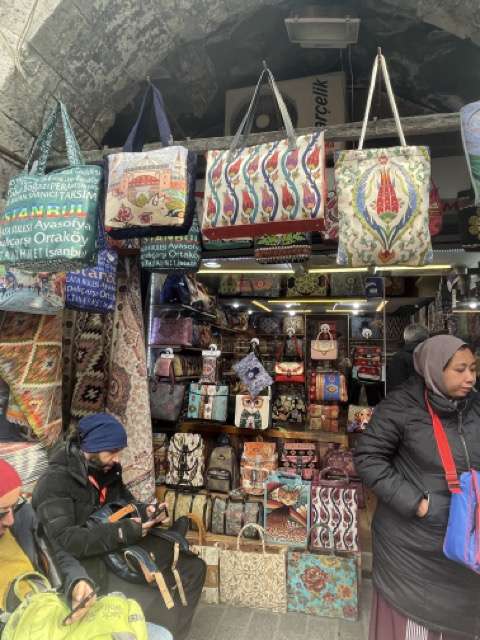
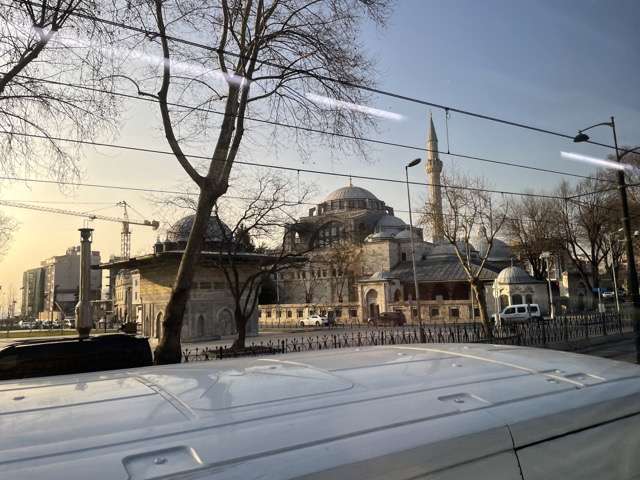
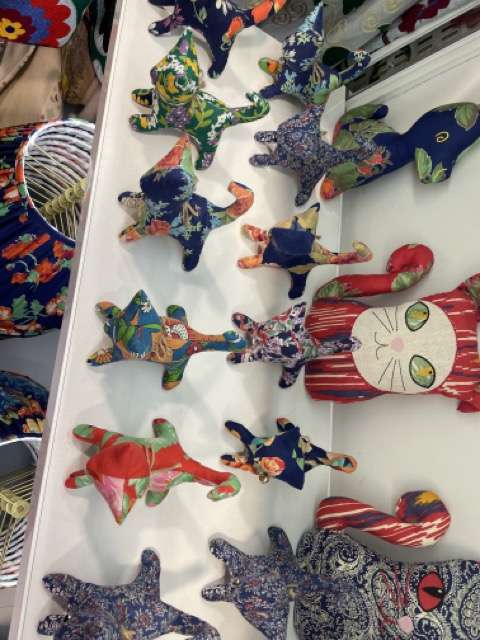
    There are many, many, many shops selling these gadgets in Türkiye, they should be called "second-hand shops".
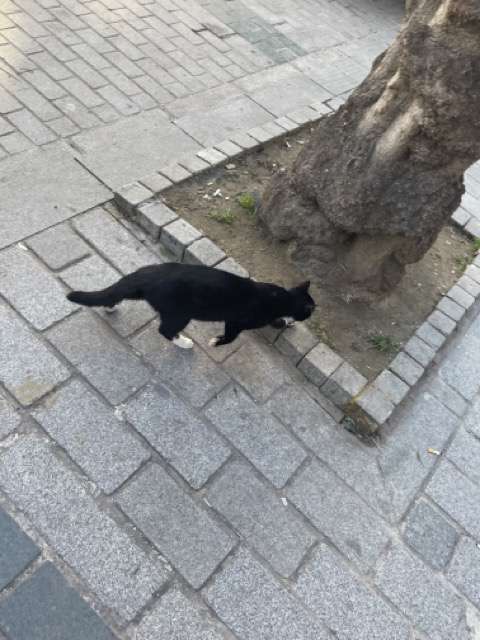
    It is worth mentioning that Türkiye is indeed the number one cat country in the universe, and cats can be seen everywhere. Friends who like cats must not miss Istanbul.
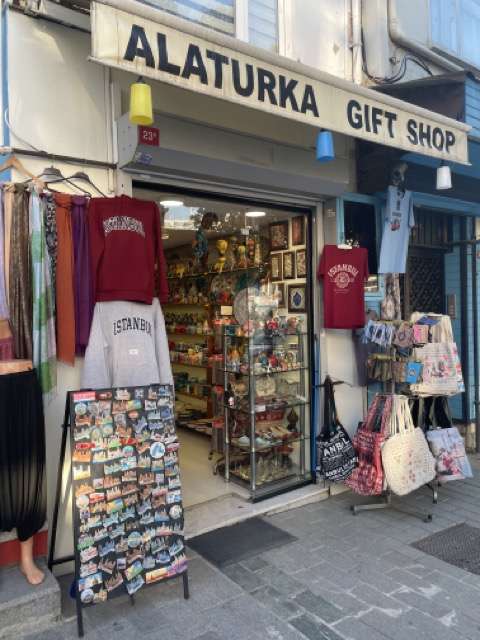
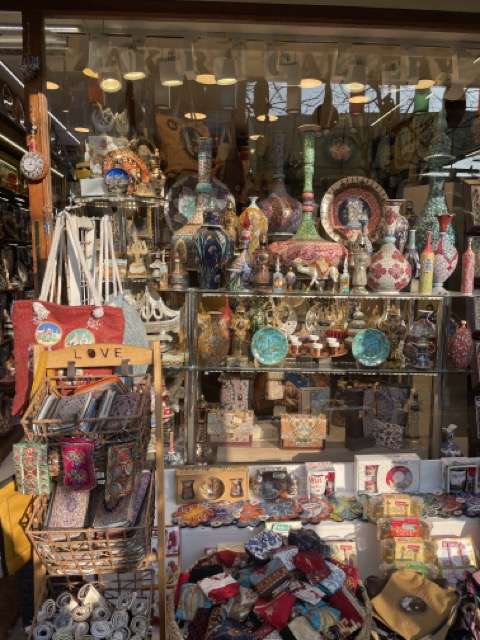
    I personally like this kind of store that displays a wide variety of goods. It reminds me of the newsstands I passed by when I was a child, and there were so many things I wanted to buy. Now that the economy is much more relaxed, I can buy whatever I want to a certain extent.
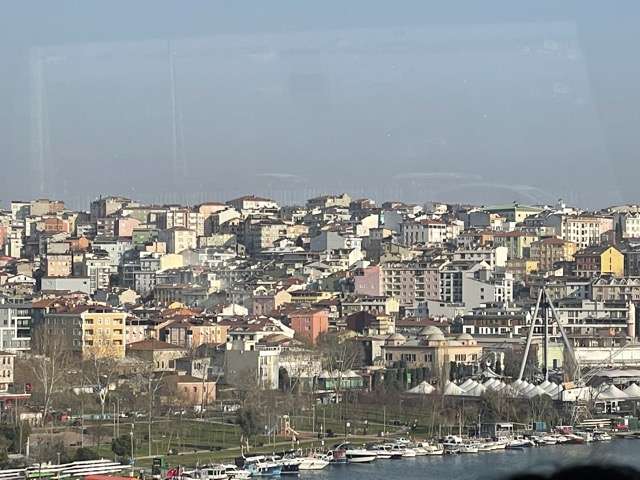
    One of the smallest seas in the world - Sea of Marmara

    I saw the seashore from afar, but I didn't know that this was the Sea of Marmara, an area located south of Istanbul, Turkey, connecting the Mediterranean Sea and the Black Sea.

    The history of the Sea of Marmara is very rich. Since the time of the Ancient Greeks, this area has been an important trade route between Europe and Asia. The importance of the Sea of Marmara was particularly prominent during the Roman and Byzantine Empires, when Istanbul (then known as Constantinople) was the capital of the empire.

    Due to its geographical location, the Sea of Marmara has often been a stage for conflict and war. For example, during World War I, Britain and France attempted to control the Bosporus and Dardanelles through the Sea of Marmara to provide assistance to besieged Russia, which led to the famous Gallipoli Campaign.
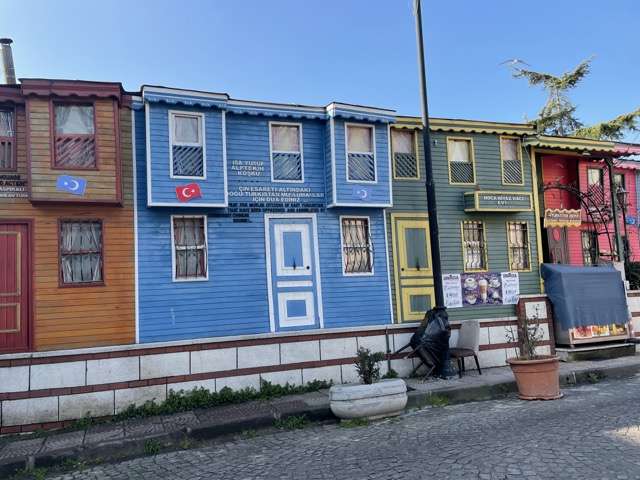
    Hippodrome of Constantinople

    The Hippodrome of Constantinople, located in Istanbul, Turkey, was an important social and sporting venue during the Roman and Byzantine periods, used primarily for chariot races and other public entertainment.

    Since my tour group is English, the following description may not be accurate.

    The history of the square can be traced back to the 3rd century AD, when it was started by the Roman emperor and completed and further expanded by Constantine the Great in the 4th century. The original square could accommodate about 100,000 spectators and was the center of city life at the time.

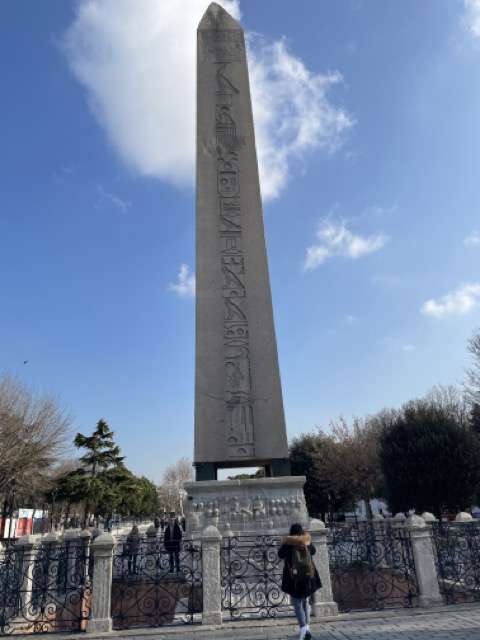
    Below are the Egyptian Obelisk, the Serpent Column, and the Column of Constantine.

    Let me tell you about this obelisk.

    The Obelisk of Thutmose III, also known as the Obelisk of Thutmose III, is an ancient Egyptian obelisk located in the Hippodrome Roman Forum in Istanbul, Türkiye.

    The monument is made of red granite and was originally about 30 meters high, but the existing part is about 19.6 meters high.

    It was built by the ancient Egyptian pharaoh Thutmose III in the 15th century BC to celebrate his victory in the Nile River basin.

    In the 4th century AD, the Roman Emperor Constantine the Great ordered the obelisk to be transported from Egypt to Constantinople and placed in the Hippodrome Forum. This is why it is called the "Egyptian" obelisk, because it was actually moved from Egypt to Constantinople.

    The monument has stood for two thousand years and is now one of the most important historical sites in Istanbul.
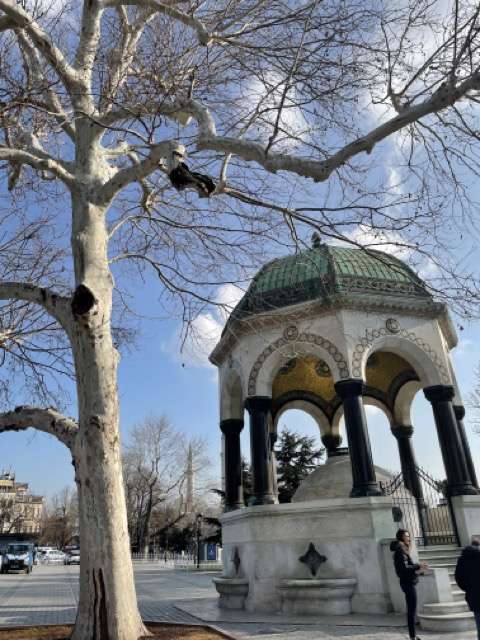
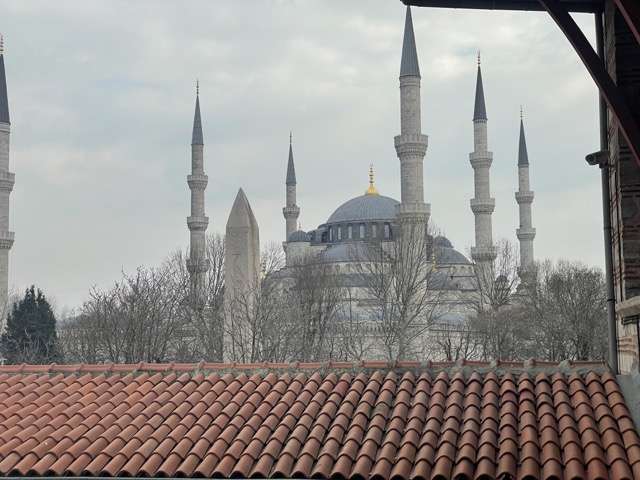
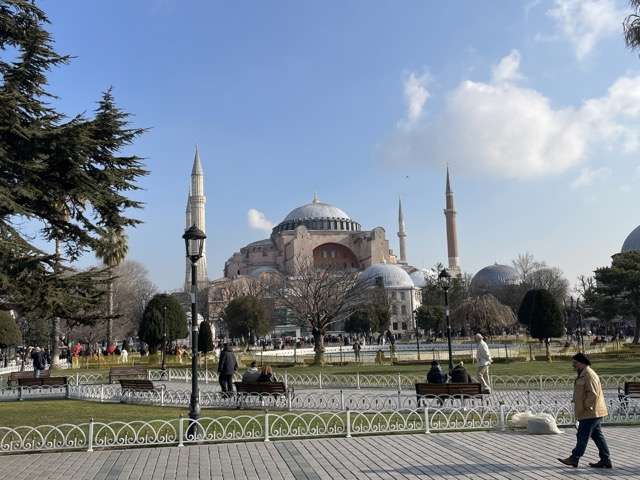
    Blue Mosque

    It's a pity that when I went there, the Blue Mosque was under maintenance and not open! !

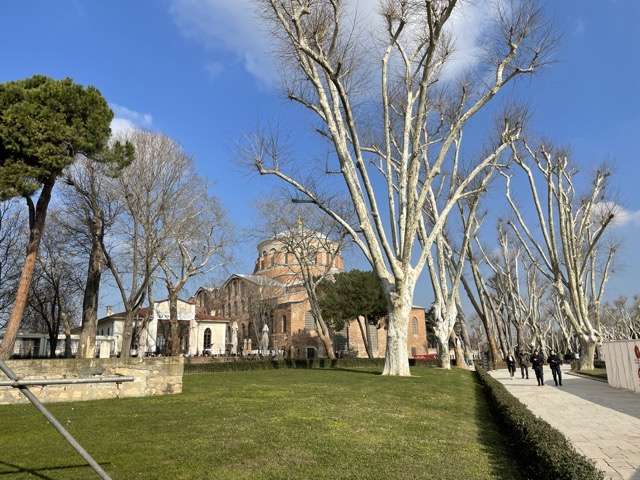
    The photo below was taken with my back to the Blue Mosque. (Don’t ask me why I didn’t take a photo, because the Mosque was completely invisible!!)

    The design of the Blue Mosque is a unique style that mixes Byzantine and Islamic architectural styles, integrating Istanbul's history and culture. Its interior is decorated with about 20,000 handmade Iznik tiles, with various floral and geometric patterns painted on the tiles. The main color is blue, so it is called the Blue Mosque.
    The Quran

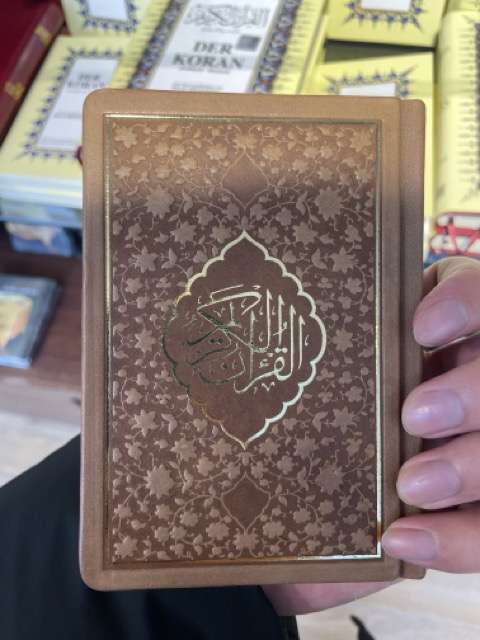
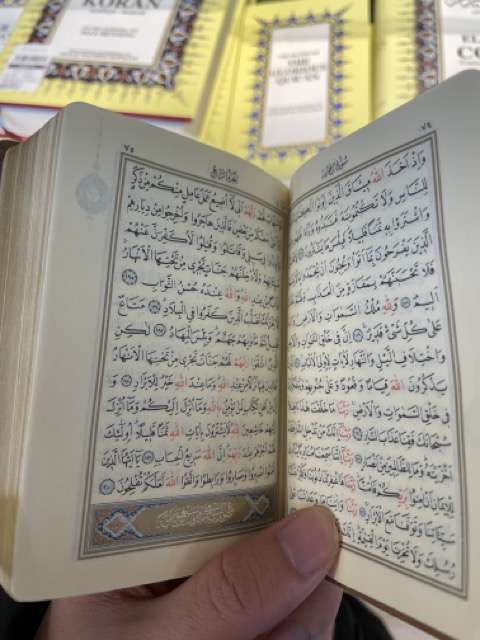
    Look at this Quran, guess how much it costs?

    It is worth mentioning that the Quran covers a variety of topics, including theology, moral laws, guidelines for social and family relationships, and references and commentaries on pre-Jewish and Christian traditions. The language style of the Quran is known to be beautiful and profound, and is regarded as the pinnacle of Arabic literature.
    Kalpakçılar, a famous market in Türkiye

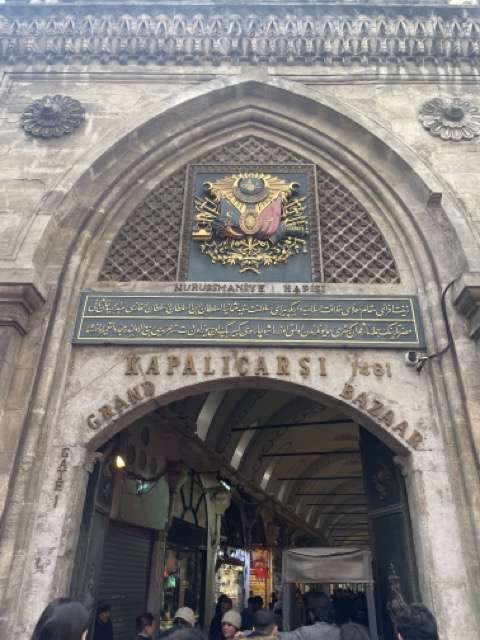
    "Kalpakçılar" means "fur merchant" in Turkish, because historically this street was mainly populated by merchants selling fur products, but now it is more famous for selling gold and jewelry.

    You can see a wide variety of gold jewelry, including bracelets, necklaces, rings, earrings, pendants, etc., as well as various jewelry and gemstones. In addition, many shops also sell traditional Turkish handicrafts and souvenirs.

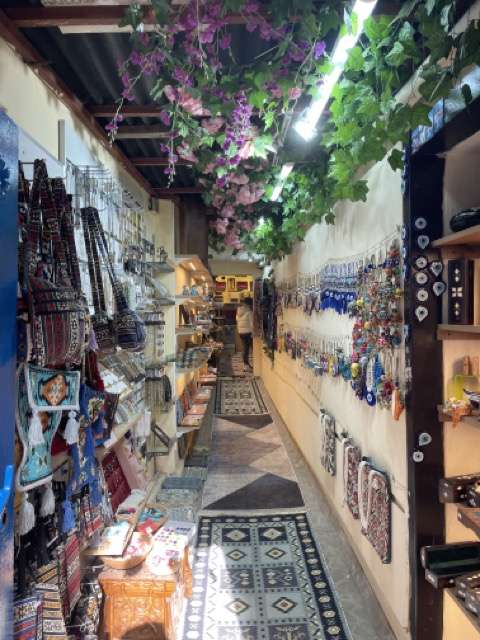
    I bought some souvenirs here! Including Turkish tea, but the Turkish tea is really so-so~~

    Just be aware that shopping here requires good bargaining skills as bargaining is usually part of shopping in Turkey!!!
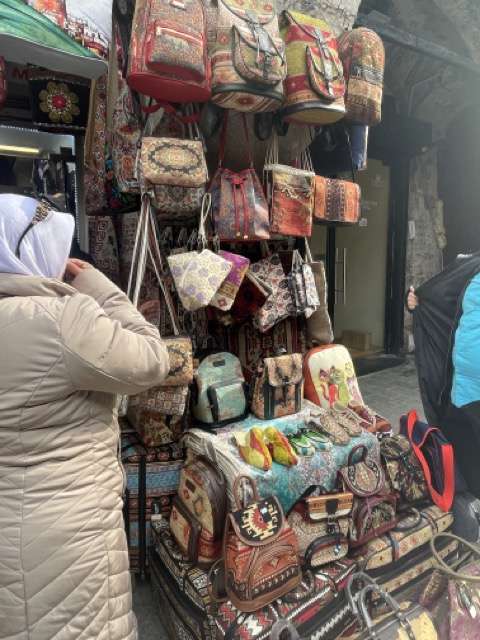
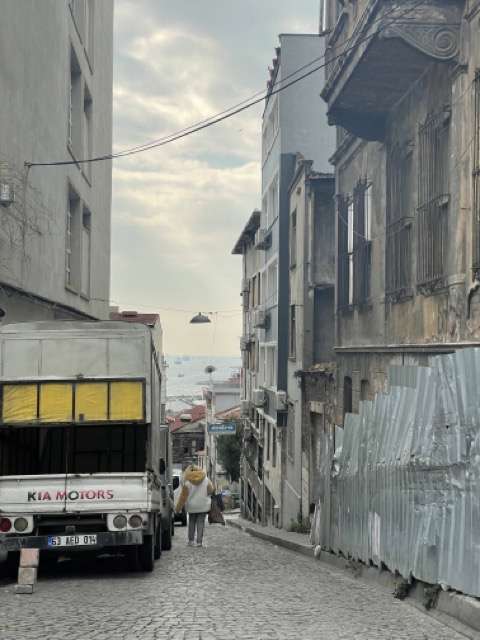
    Seeing the beach again!!!
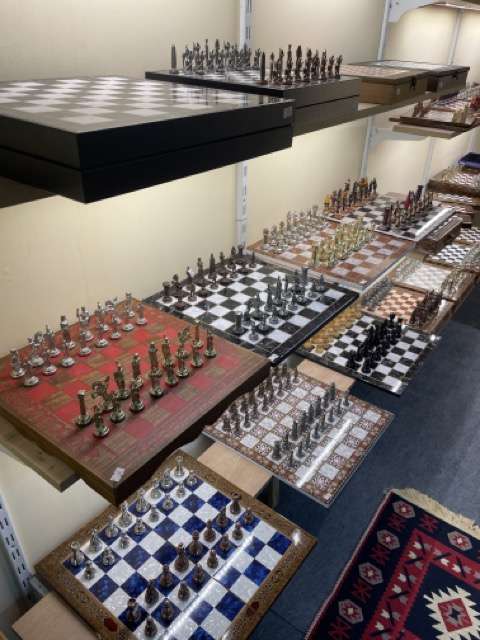
    Chess

    It has to be said that the Turkish people are also quite enthusiastic and persistent about chess. Whether in parks, cafes, or at home, you can see people playing chess.

    This passion is not limited to amateurs; Türkiye also has high achievements in international chess competitions.

    It is worth mentioning that Turkey has also vigorously promoted chess in education. In 2005, the Turkish Ministry of Education included chess in the compulsory curriculum of primary schools, making Turkey one of the first countries in the world to include chess in the education system.
    It's over

    After a day's trip, I returned to Istanbul Airport exhausted, dragging dozens of kilograms of luggage.
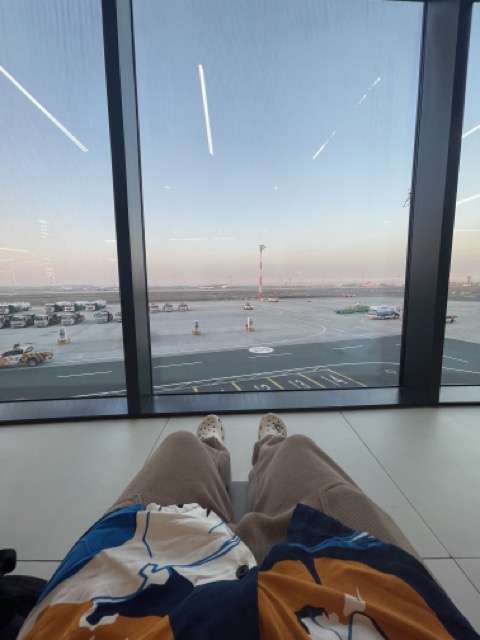
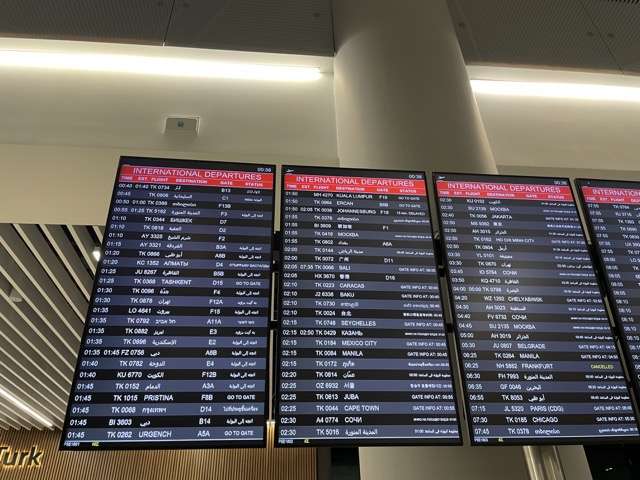
    Call it a day, back to Hong Kong!!
  • 音乐与Python

    Music and Python

    Written in September 2020. I wrote it for fun. I will optimize the code in the next article. It is very unprofessional QAQ.

    This article starts with the study of music theory, starting from the twelve-tone equal temperament, introducing some basic and necessary music theory knowledge, and then writing a python file to output a chord audio file.

    Music theory knowledge part:

    1. Brief Introduction to Temperament

    1. Introduction

    Temperament, also known as "music", is the science that studies the composition and application of musical scales. Temperament studies the musical scales used in music. The sounds used in music are mostly fixed, while the musical scale is based on a certainintervalA system of musical tones based on the law of pitch and specified by mathematical methods. Each unit in the system is called a "law"; a musical scale is a series of tones composed of several laws selected from the law system according to certain specifications of interval relationships, and each unit in it is called a "tone". When "tone" and "law" are collectively referred to as "musical law", in addition to the law system, it also refers to all musical tones with precise specifications.

    In short, the law is to use mathematical methods to determine the vibration frequency of each pitch (not just one). "Law" is the basic unit of the law system. The concepts of "law" and "sound" are similar but slightly different. Each unit in the law system is called a "law", while each unit in the scale is called a "sound". The relationship between the law system and the scale is very close.

    2. Calculation of Laws

    Temperament calculation method is the interval calculation method, which uses frequency ratio or interval value to represent and calculate the size of the interval.

    From ancient times to the present, laws have been constantly changing. Different legal systems are determined by different laws of life.

    There are four types of interval values: logarithmic value, octave value, cent value and average interval value.

    3. Circle-of-fifths system

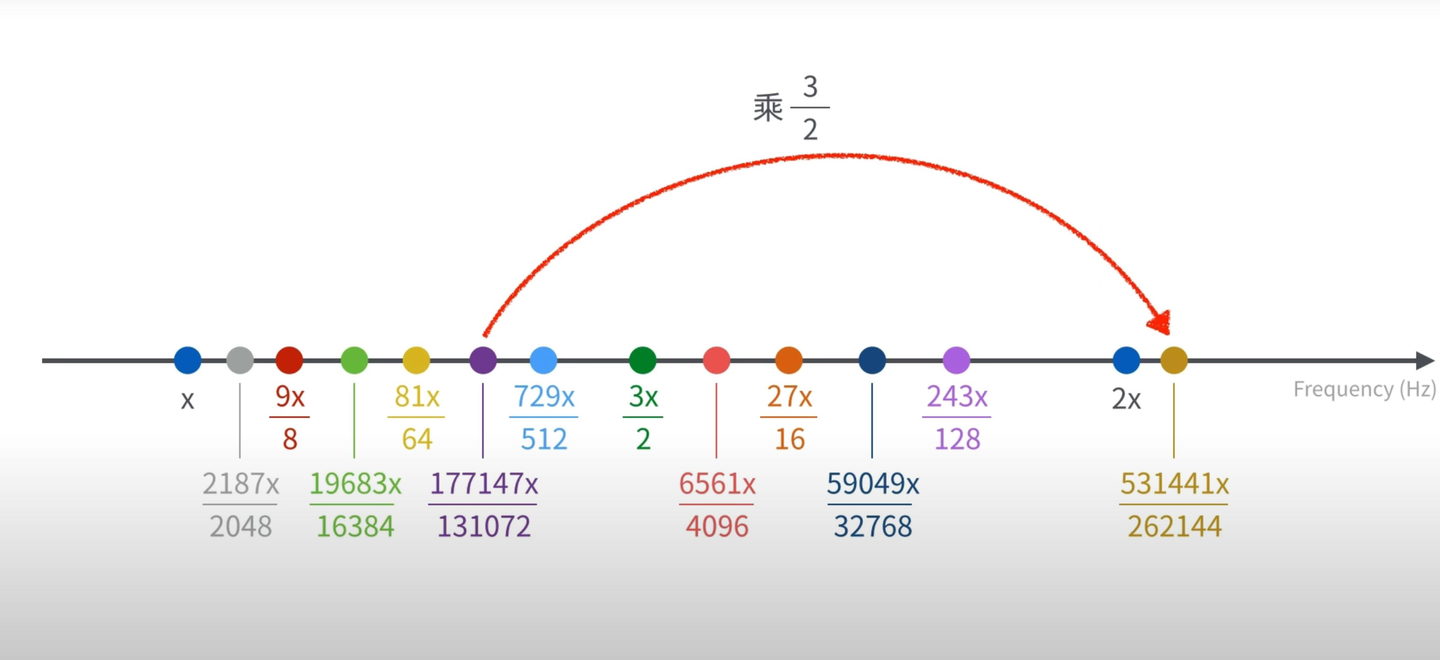
    The fifth generation law stipulates that the frequencies of the two notes that form a perfect fifth interval are set at 2:3. This method of generating a law every fifth degree and continuing to generate each law is called the "fifth generation method".

    Among them, due to the existence of the maximum tone difference, the fifth-generation law cannot be circulated on the twelve-tone scale to form the scale of each key. That is, starting from the tonic, after generating the law twelve times (or more times) and incorporating it into the same octave, it is impossible to return to the tonic. This creates certain obstacles to the use of the fifth-generation law.

    4. Just intonation

    The frequencies of the notes in the scale are derived from ratios of small integers. In this system, the intervals between notes are based on simple numerical ratios, such as 2:1 for an octave, 3:2 for a perfect fifth, and 4:3 for a perfect fourth. These ratios create harmonically pure intervals that are said to produce more natural and pleasing to the ear than the isothermal tuning system used in modern Western music.

    5. Twelve-tone equal temperament

    The twelve-tone equal temperament is a tuning system that divides an octave into twelve semitones with equal frequency ratios, also known as the "twelve-equally proportional temperament".

    All of our codes below are based on the twelve-tone equal temperament. The reason is that the piano is designed based on the twelve-tone equal temperament.

    Baidu Encyclopedia writes: The twelve-tone equal temperament was first proposed by a scientist in the Ming Dynasty of my country.Zhu ZaiyuDiscovered in 1584. Later spread to the West via the Silk Road.

    1605 Dutch mathematicianSimon SteffenIn an unfinished manuscript "Van de Spiegheling der singconst" it was proposed to use

    He calculated the twelve-tone equal temperament, but due to insufficient precision, the string length figures he calculated deviated from the correct number by as much as one or two units.

    The frequency ratio of an octave is 2:1, so the frequency ratio between the various tones of the twelve equal temperaments should be:

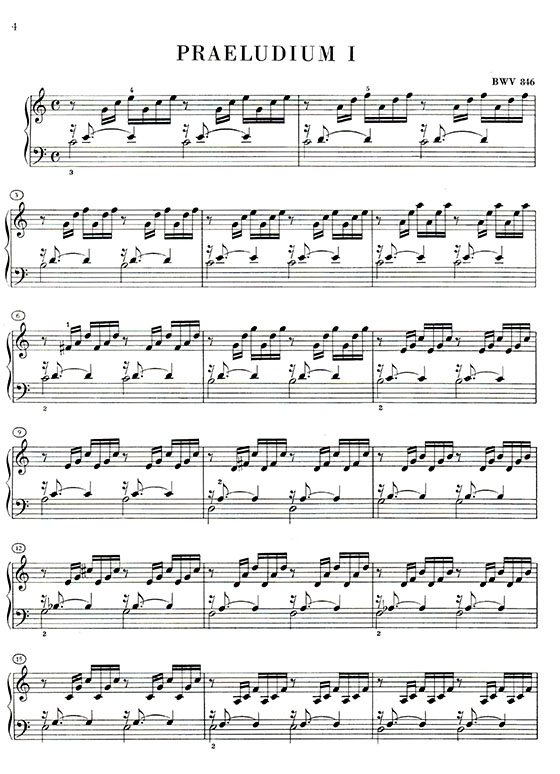
    In music practice, musicians at that time were well aware of the convenience of the twelve-tone equal temperament. Composers and performers from all over the world began to use the twelve-tone equal temperament and were also committed to its development. For example, JS Bach of Germany wrote two volumes of "Well-Tempered Piano Music". Although these two volumes did not only use the twelve-tone equal temperament (some irregular temperaments were also used), they are considered to be exemplary works that fully utilized the effectiveness of the twelve-tone equal temperament and could be freely transposed.

    6. Comparison of the three systems

    Each of the three tuning systems has its own advantages and disadvantages. The twelve-tone equal temperament solves some contradictions between the fifth-tone temperament and the pure temperament, such as the contradiction that the starting temperament cannot be returned to after increasing the number of temperaments, but the twelve-tone equal temperament will affect the harmony of the interval. In general, the twelve-tone equal temperament reconciles and compromises the fifth-tone temperament and the pure temperament, which is between the two and closer to the fifth-tone temperament. The twelve-tone equal temperament is currently the most widely used tuning system.

    2. Basic Music Theory - P1 - Musical Tone System and Grouping

    1. Music system and musical series

    There are 88 keys on a piano. The sum of these musical notes is called –Music System.

    Arranged from low to high is called –Tone Series.

    2. Note name

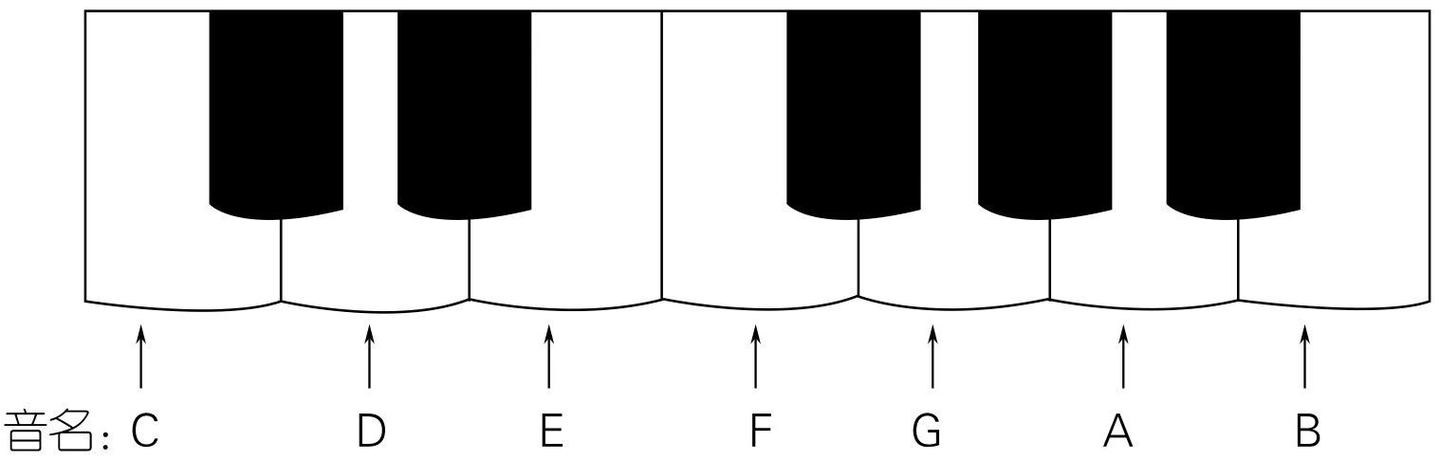
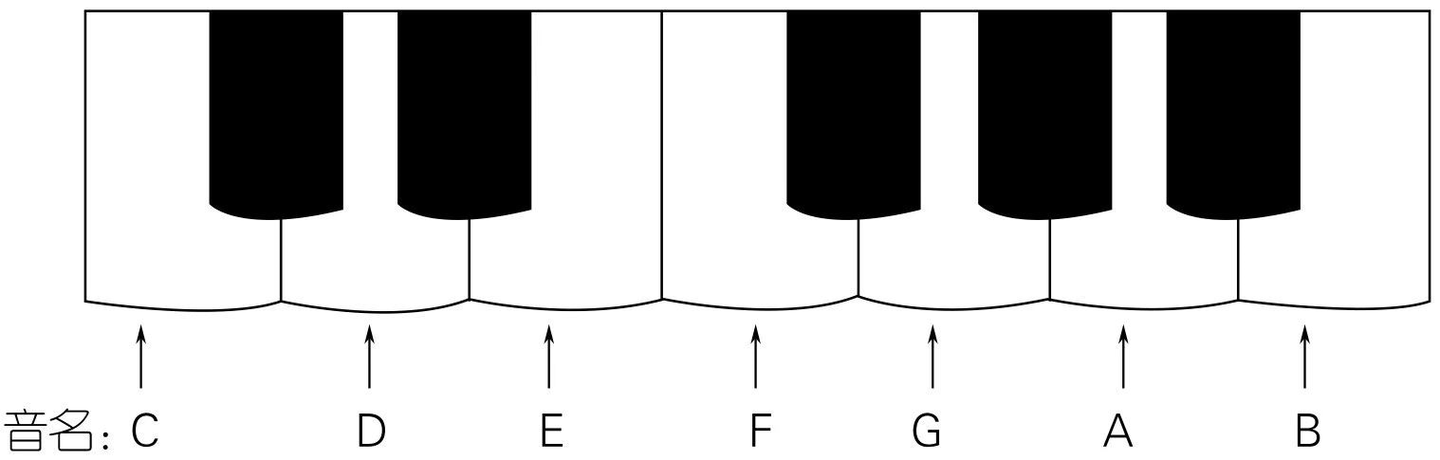
    In the musical system, each musical note has a fixed name, i.e., note name, which is usually represented by letters C, D, E, F, G, A, B.

    These seven pitches are also called basic pitches, and their positions on the piano keyboard are fixed.

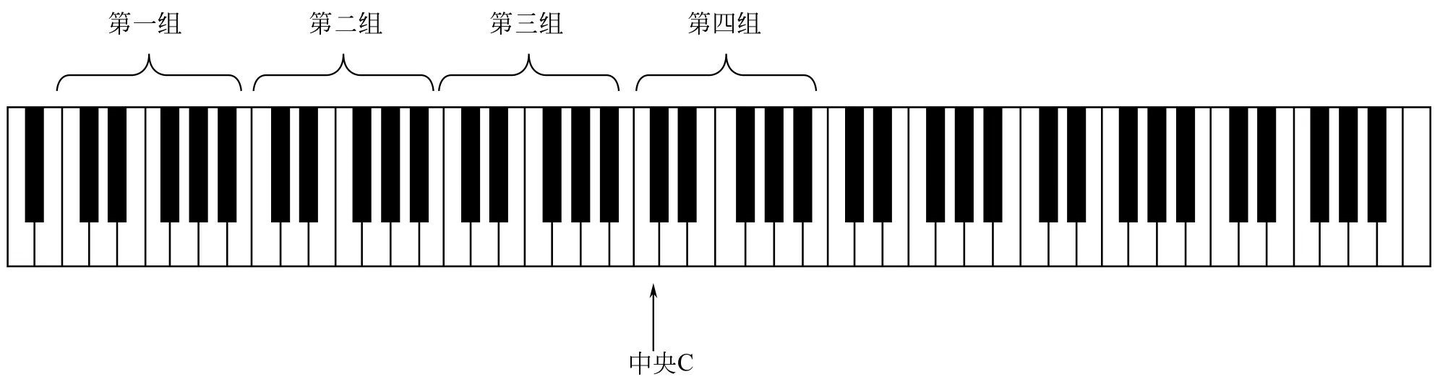
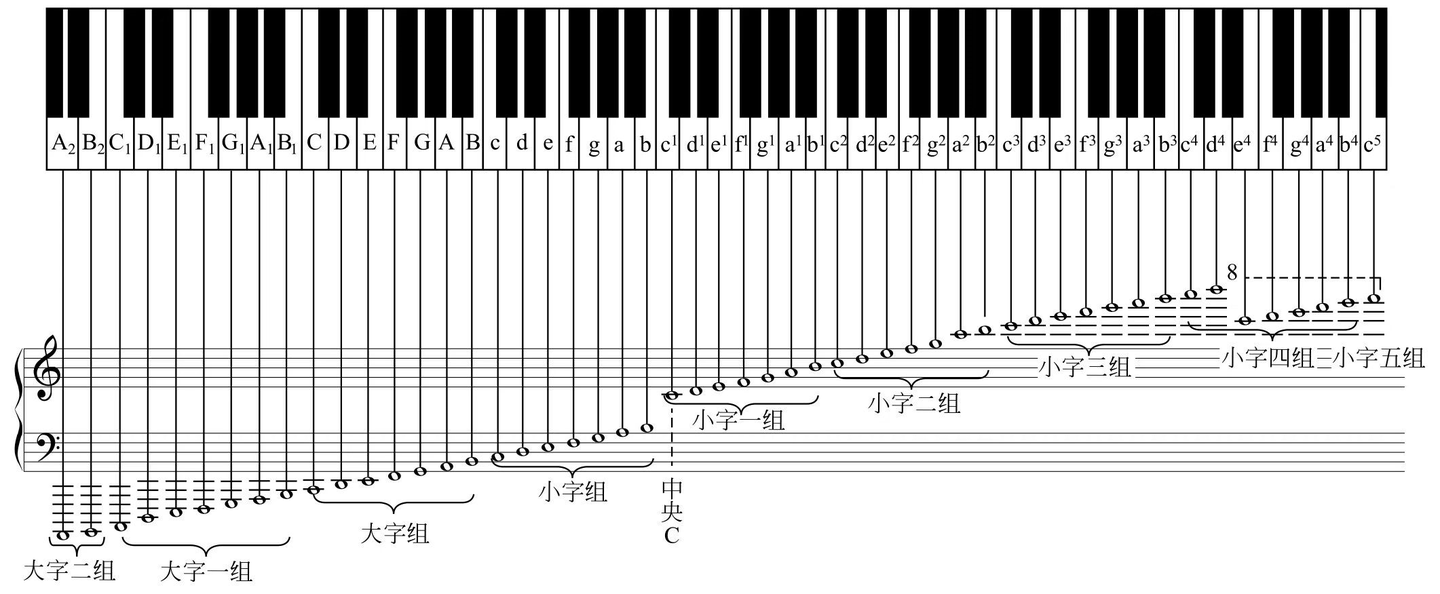
    3. Sound grouping

    The piano is divided into different areas.

    The group of notes starting from the middle C on the piano keyboard is called the small note group 1, also known as the "axis group". The small note group 1 to the right is called the small note group 2, small note group 3, small note group 4, and small note group 5; the small note group 1 to the left is called the small note group, large note group, large note group 1, and large note group 2.

    3. Basic Music Theory - P2 - Staff & Notes

    1. Staff

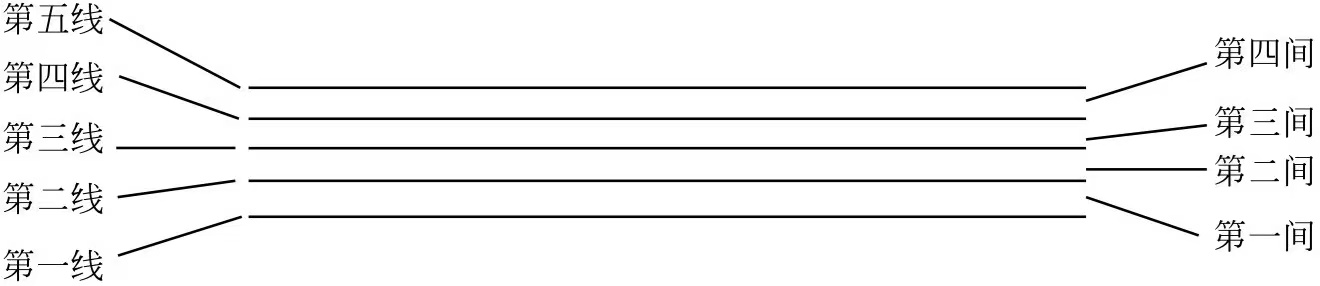
    The staff is composed of five lines and four spaces, which are used to record the pitch of notes. Because the staff has five equidistant parallel horizontal lines, it is called the five-line staff.

    image

    2. Clef

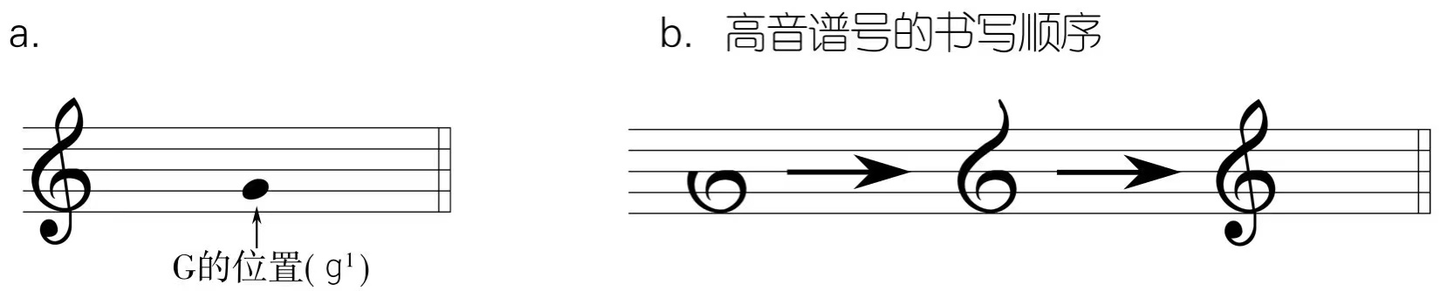
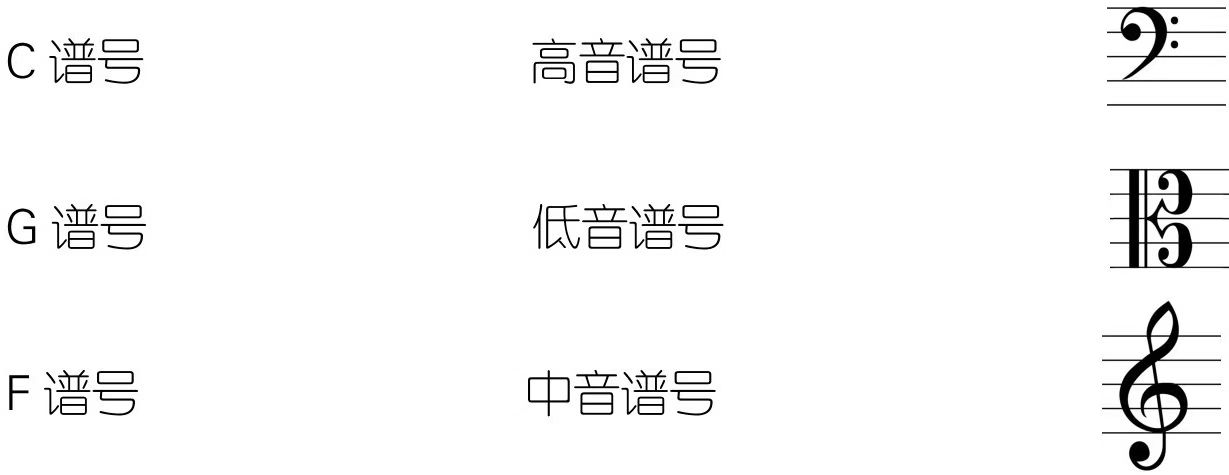
    Here we just need to briefly introduce the treble clef. In addition, there are also bass clef and alto clef.

    image

    3. Musical Notes

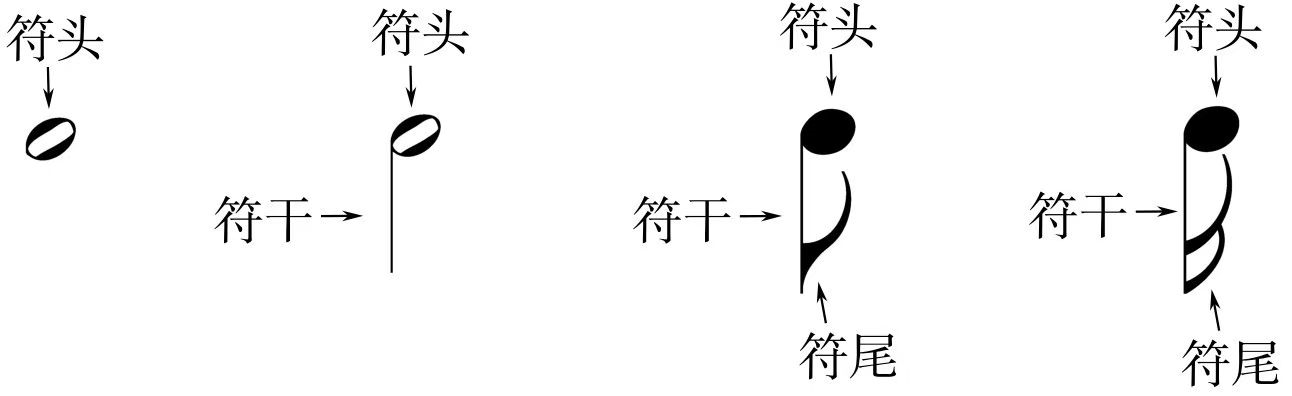
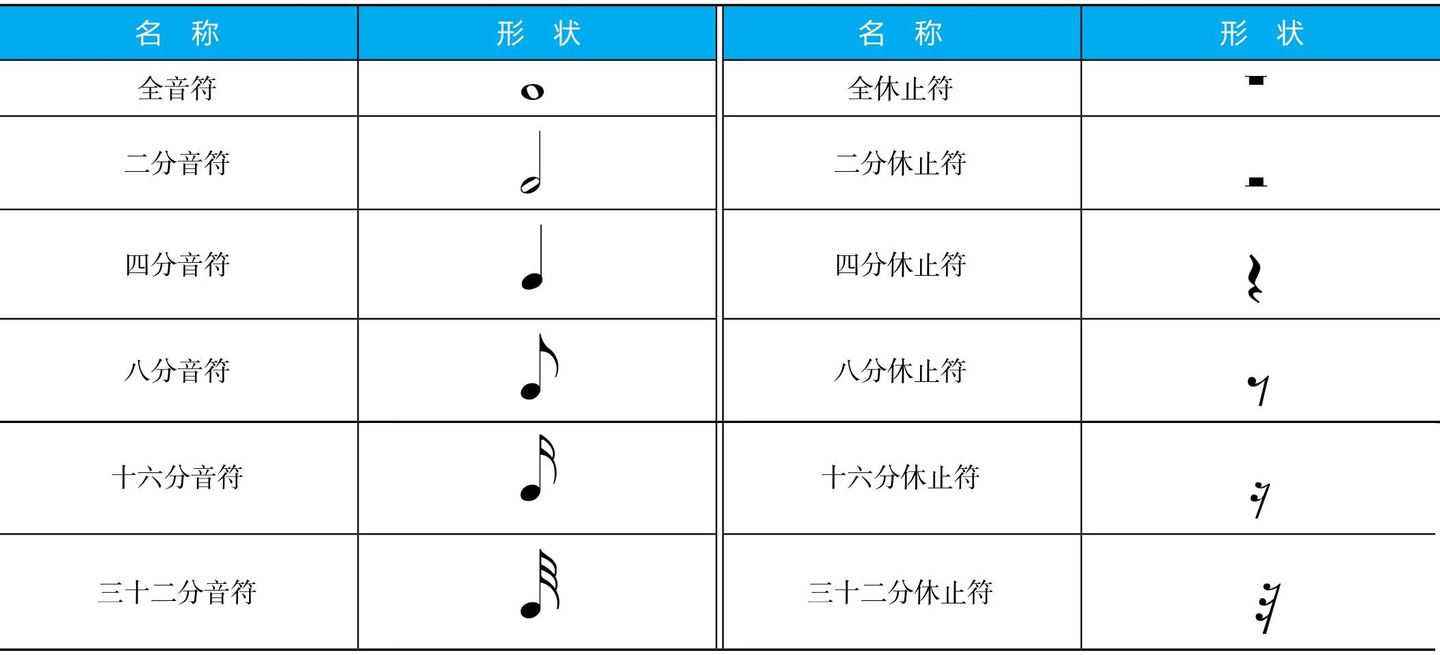
    A note consists of three parts: the note head (the hollow or filled oval symbol), the stem (the short vertical line), and the tail (the small arc on the right side of the stem).

    4. Rest

    Rests are symbols used to indicate pauses or interruptions in music.

    During the progress of music, although the rest indicates a brief silence, it has a special meaning at this time, and the music is not interrupted, so the rest is one of the important components of a musical work.

    image

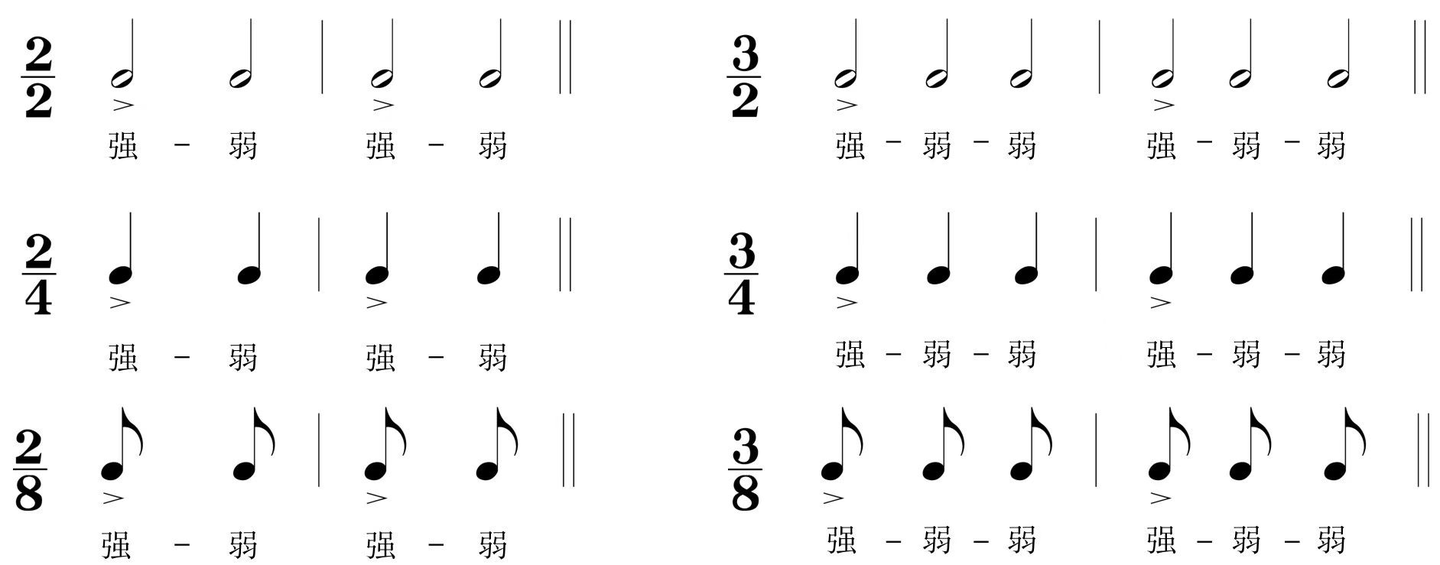
    5. Time Signature

    The numerator number represents the number of beats in a measure, and the denominator number represents how many notes make up a beat. Be careful not to read it as a fraction of a beat!

    In addition, the time signature also clarifies the rules for changes in the strength of the melody.

    image

    4. Basic Music Theory - P3 - Intervals

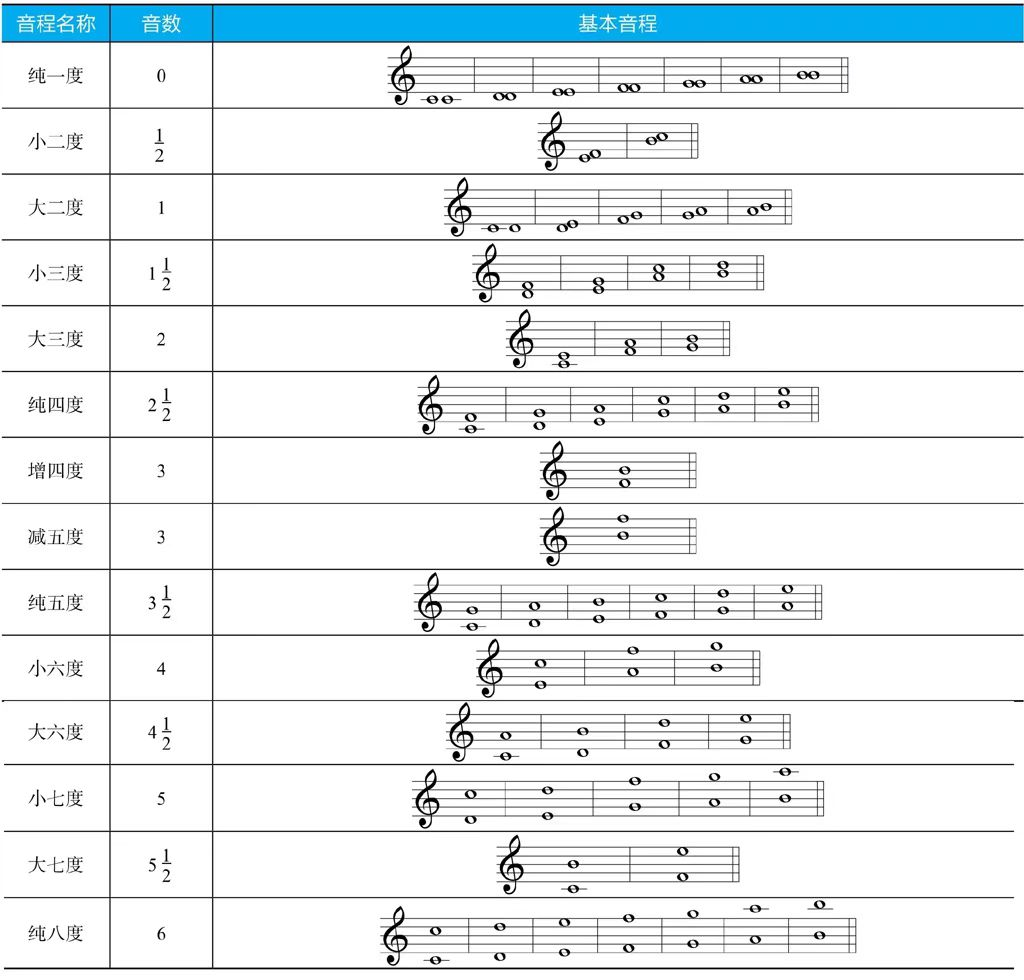
    1. Interval

    The pitch distance between two notes is called the interval.

    There are two types of intervals: melodic intervals and harmonic intervals.

    In short, a melodic interval is when two notes sound one after the other, while a harmonic interval is when they sound at the same time.

    2. Melodic intervals

    Read in the order of pronunciation.

    3. Harmonic Intervals

    The lower note is called the root note, and the upper note is called the crown note.

    4. Consonant and dissonant intervals

    The sound effects of consonant intervals sound pleasant and harmonious, and can be divided into perfect consonant intervals and incomplete consonant intervals.

    Perfect consonant intervals include perfect first, perfect fourth, perfect fifth, and perfect octave; imperfect consonant intervals include minor third, major third, minor sixth, and major sixth.

    The sound of pure octave sounds very integrated, like the sound of one note, but because it is too integrated, the sound will sound hollow.

    The sound effects of the perfect first, perfect fourth, and perfect fifth intervals are slightly fuller than those of the perfect octave, but they also appear hollow.

    Therefore, all pure intervals (perfect first, perfect fourth, perfect fifth, perfect octave) are perfectly consonant intervals.

    The sound of dissonant intervals is harsh, tense and unstable, such as major and minor seconds, major and minor sevenths, augmented fourths and diminished fifths.

    Although dissonant intervals sound sharp, they are also important elements in musical works.

    5. Basic Music Theory - P4 - Mode

    1. Tuning

    A system of musical notes of different pitches, organized around a stable central tone (tonic) in a certain relationship, is called a mode. The most widely used mode in the world today is the major and minor mode.

    Among them, Bach's "Well-Tempered Clavier" is a classic among classics in major and minor keys.

    2. Tonic

    In the mode, the tonic is the central tone in the core position, which has the strongest sense of stability and other tones tend to it. In songs (music), the tonic often appears on the strong beat, the longer tone or the ending.

    3. Major Mode

    The major scale is abbreviated as "major" and consists of seven scales. The major third is the interval between the tonic and the Ⅲ scale, which is also the characteristic of the major scale. Among them, the Ⅰ, Ⅲ, and Ⅴ scales form a major triad, so the color of the major scale is bright and brilliant.

    There are three types of major keys: natural major, harmonic major, and melodic major.

    1. Natural major

    The natural major is the most commonly used major key, consisting entirely of natural notes.

    The natural major scale consists of five whole tones and two half tones.

    Its scale structure is: whole tone-whole tone-semitone-whole tone-whole tone-whole tone-semitone, that is, it is composed of major second, major second, minor second, major second, major second, major second, and minor second intervals.

    There is a tone (black key) between C and D, so the CD is called full tone.

    There is no interval between E and F, so it is called a semitone.

    To make it easier to memorize, the natural major key is compiled into a mnemonic: full, full, half, full, full, full, half.

    That is what we usually say: de re mi fa sol la si

    The key of C natural major is shown below:

    image

    2. Harmonic major

    On the basis of the natural major scale, lowering the VI note by a semitone results in the harmonic major scale.

    Its characteristic is the augmented second interval formed between the flat VI and VII notes.

    This augmented second is the mark of the harmonic major key and also the characteristic of the harmonic major key.

    The C harmonic major scale is shown below:

    image

    3. Melodic major

    On the basis of the natural major scale, lowering the VI note by a semitone results in the melodic major scale.

    Its characteristic is the augmented second interval formed between the flat VI and VII notes.

    This augmented second is the mark of the harmonic major key and also the characteristic of the harmonic major key.

    The C melodic major scale is shown below:

    image

    4. Minor mode

    The minor mode is simply called "minor" and is also composed of seven pitches.

    The relationship between its tonic and the Ⅲ degree is a minor third, which is also the characteristic of the minor mode. Among them, the Ⅰ, Ⅲ, and Ⅴ degrees form a minor triad, so the color of the minor mode is soft and dim.

    There are also three types of minor keys: natural minor, harmonic minor, and melodic minor.

    1. Natural minor

    The natural minor scale also consists of five whole tones and two semitones, and its scale structure is whole tone-semitone-whole tone-whole tone-semitone-whole tone-whole tone, that is, it is composed of major second, minor second, major second, major second, minor second, major second, and major second intervals.

    The a natural minor scale is shown below:

    To make it easier to memorize, the mnemonic is: whole, half, whole, whole, half, whole, whole.

    2. Harmonic minor

    On the basis of the natural minor scale, raising the seventh degree by a semitone results in the harmonic minor scale.

    Its characteristic is the augmented second interval formed between the VI and the raised VII, and the VII has the function of a leading tone tending towards the tonic after being raised by a semitone, and it is more tense than the natural minor.

    The a harmonic minor scale is shown below:

    3. Melodic minor

    On the basis of the natural minor scale, the VI and VII degrees in the ascending scale of the natural minor are raised by a semitone, and then these two notes are restored in the descending scale, which is the melodic minor.

    The a-melodic minor scale is shown below:

    6. Basic Music Theory - P5 - Key Signature

    1. Key Signature

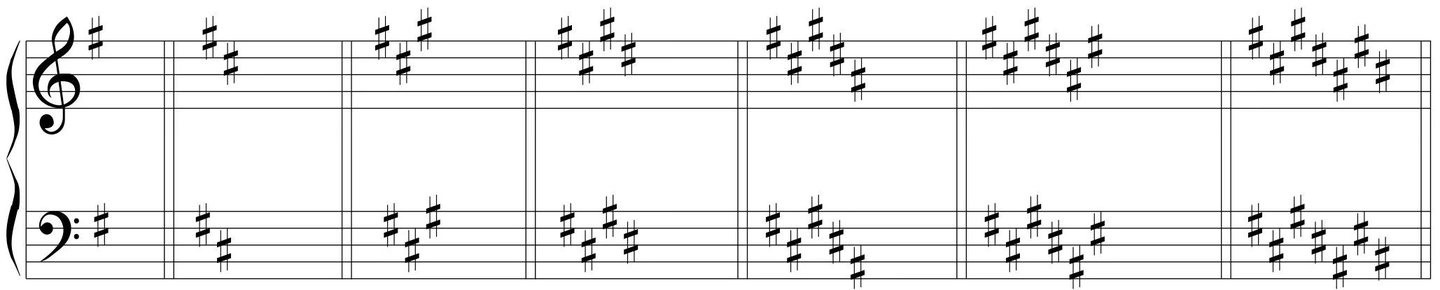
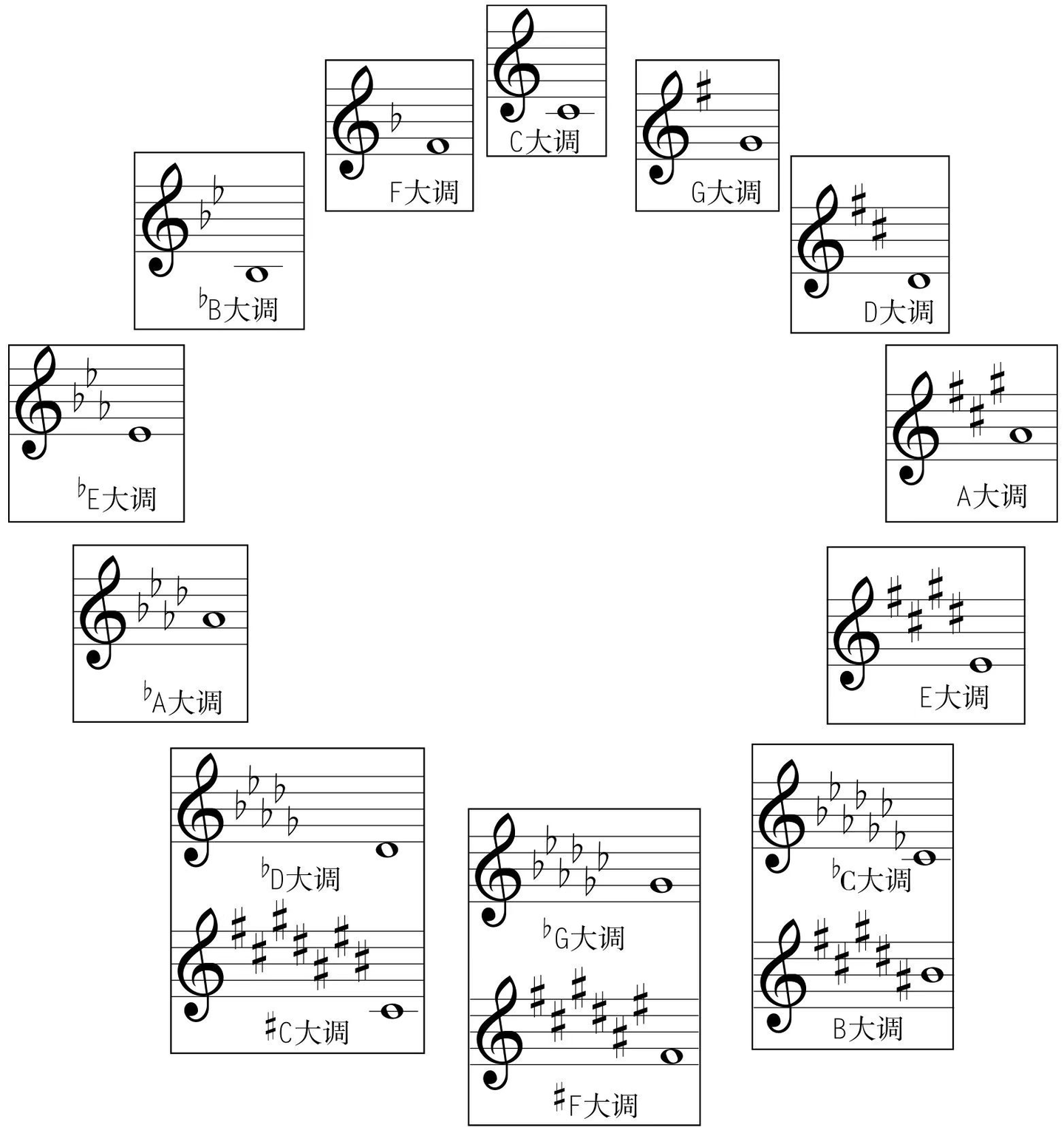
    The key signature is a symbol that indicates the pitch (i.e. the pitch of the main note) of a song (music). It is located at the beginning of each line of the staff (after the clef) or where a new key appears during the music.

    Key signatures are written using sharp and flat signs.

    Python arrangement part:

    1. Understanding the MIDO library

    1. Import mido

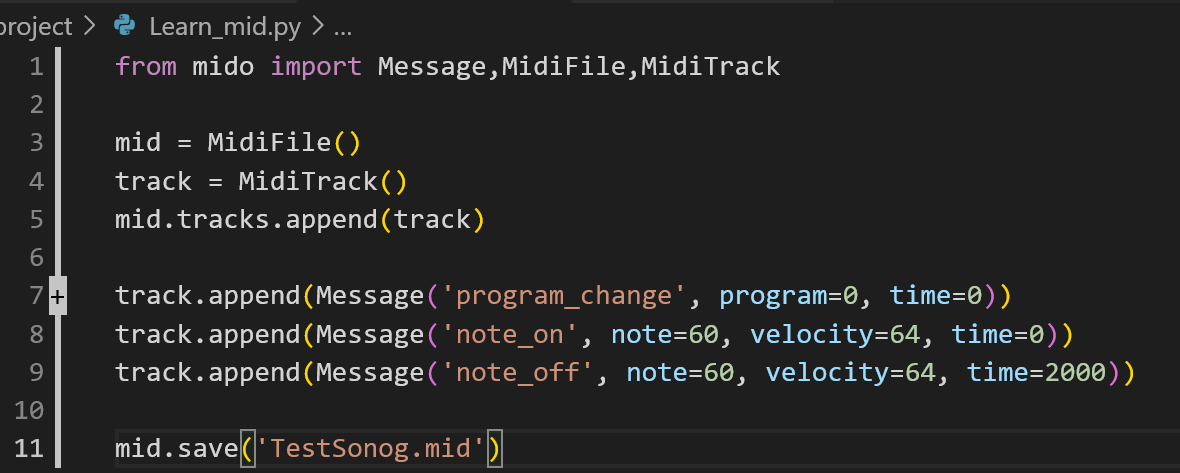
    from mido import Message,MidiFile,MidiTrack

    2. Mido basic framework

    Create two mido library objects: MidiFile(), MidiTrack()

    The former is used to edit, generate and output Midi files, and the latter is used for midi file track editing.

    mid = MidiFile() track = MidiTrack() mid.tracks.append(track)

    Add information in track object, 'program_change' means switch track.

    The intuitive understanding is: before editing a track, you need to select the track first. (This is the official fixed routine, it doesn’t matter if you don’t understand it, just follow it)

    track.append(Message('program_change', program=0, time=0))

    3. Write notes

    After selecting the track, you can add notes directly to the track. Note that the time unit here is milliseconds.

    track.append(Message('note_on', note=60, velocity=64, time=0))

    After adding, add an end mark, and this is the point where the writing of a note is truly completed.

    track.append(Message('note_off', note=60, velocity=64, time=2000))

    After adding, you can directly generate a midi file

    mid.save('MyFirstDamnSong.mid')

    4. Code

    The code is as follows:

    2. Combined with Music Theory

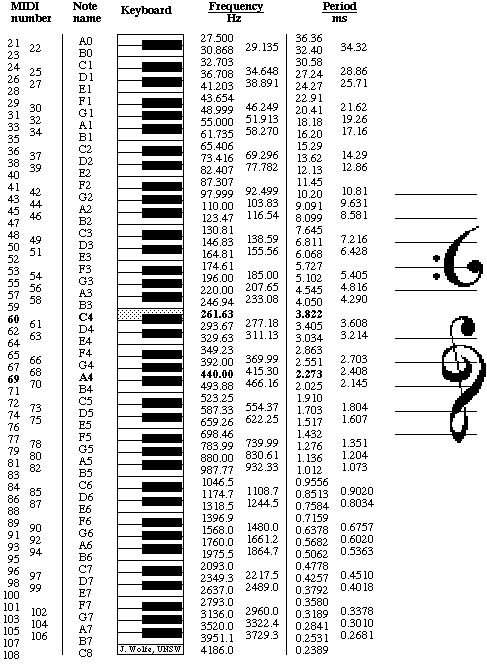
    1. Midi file frequency number table:

    From the table above, we can see that the midi number of middle C is 60.

    2. Writing tool library

    1. Task Analysis

    We first write a tool library Notes_Toolbox.py to define some commonly used and basic things.

    Define the basics: intervals, note names, modes, chords, beats, fundamental notes, etc.

    Then write some simple methods for calling, such as returning a set of chords, automatically changing the key, and getting the MIDI frequency number through the five-line score.

    2. Define variables

    serial numberVariable NameIs static?Default valueeffect
    1bpmNo125Beat
    2timePerBeatNo60 / bpm * 100Duration of each beat (milliseconds)
    3base_notestatic60MIDI number for middle C
    4note_name[]static['C','D','E','F','G','A','B']musical alphabet
    5major_notes[]static[0, 2, 2, 1, 2, 2, 2, 1]Diatonic Scale
    6Cmajor_notes[]static
    7Eflatmajor_notes[]static
    8Cmajor{}static{'C': 60, 'D': 62, 'E': 64, 'F': 65, 'G': 67, 'A': 69, 'B': 71}C major dictionary
    9Eflatmajor{}static{'C': 63, 'D': 65, 'E': 67, 'F': 68, 'G': 70, 'A': 72, 'B': 74}E minor dictionary

    3. Define functions

    serial numberMethod NamereturnPassing in parameterseffect
    1get_noteMIDI Numbernote,group=0,**kwEnter the note name and note area, and return the corresponding MIDI number. (Needs improvement, no black keys)
    2get_chordChord Arrayname, **kwEnter the chord name and return the chord array
    3originToEflatMajorNew E minor MIDI number arraylist,**kwEnter C major and return E minor. (Needs improvement to support specifying which key to change to)
    bpm = 125 #why 125: #bpm = 1 * 1000 / 8 timePerBeat = 60 / bpm * 1000 base_note = 60 # C4 note_name =[ 'C','D','E','F','G','A ','B' ] major_notes = [0, 2, 2, 1, 2, 2, 2, 1] Cmajor_notes = [] Eflatmajor_notes = [] for num in range(12): Cmajor_notes.append(base_note+sum(major_notes[0:num+1])) Eflatmajor_notes.append(base_note+ 3+sum(major_notes[0:num+1])) # There is only one area Cmajor = dict(zip(note_name,Cmajor_notes)) # Cmajor = {'C':60,'D':62,'E':64,'F':65,'G':67,'A':69,' B':71} Eflatmajor = dict(zip(note_name,Eflatmajor_notes)) # Eflatmajor = {'C': 63, 'D': 65, 'E': 67, 'F': 68, 'G': 70, 'A': 72, 'B': 74} def get_note(note,group=0,**kw ):#Group = 0 means 4Group global base_note,major_notes return base_note + group*12 + sum(major_notes[0,note]) def originToEflatMajor(list,**kw): Ef=[] for x in list: Ef.append(x+3) return Ef #get_note(1,group=0) return 60 #get_note(2,group=0) return 62 def get_chord (name): chord = { "Major3":[0,4,7,12],# Major triad "Minor3":[0,3,7,12],# Minor triad "Augmented3":[0,4,8,12],# Augmented triad "Diminished3":[0,3,6,12],# Diminished triad "M7":[0,4,7,11],# Major seventh chord "Mm7":[0,4,7, 10],#dominant seventh chord "m7":[0,3,7,10],#minor seventh chord "mM7":[], #... } return chord[name] #get_chord("Major") return [ 0,4,7,12]

    3. Write a chord breakdown

    Now that we have written the tool module, we can focus on the chord part.

    1. Write an output chord function

    Output broken chords to midi files

    When using this method, you need to pass in:

    serial numberParameter name:Incoming:Example:
    1trackOutput audio interface of mido libraryMidiTrack()
    2rootThe name of the note'C','D','E','F','G','A','B'
    3nameThe name of the chord, defined in Notes_Toolbox'Major 3'…
    4formatOutputting the broken chords[0,1,2] [1,3,2,3]…
    5lengthHow long the note lasts4

    Just put the source code:

    def add_broken_chord(root, name, format, length, track, tone_name='Cmajor', root_base=0, channel=0): # The default is C major root_num = Notes_Toolbox.Cmajor if tone_name == 'Eflat': root_num = {'C': 63, 'D': 65, 'E': 67, 'F': 68, 'G': 70, 'A': 72, 'B': 74} root_note = root_num[root] + root_base*12 # 解作根音time = (length * 480) / len(format) # This is the official document writing, I don’t understand it either. Time refers to the duration of the note for broken_chord in format: # Through the for loop, output the notes of the chord one by one note = root_note + Notes_Toolbox.get_chord(name)[broken_chord] track.append(Message('note_on', note=note, velocity=60, time=0, channel=channel)) track.append(Message('note_on', note=note, velocity=60, time=round(time), channel=channel))

    2. Call reference:

    format = [0, 1, 2, 3] add_broken_chord('C', 'Major3', format, 4, track) add_broken_chord('C', 'Minor3', format, 4, track) add_broken_chord('C', ' Augmented3', format, 4, track) add_broken_chord('C', 'Diminished3', format, 4, track) add_broken_chord('C', 'Diminished3', format, 4, track)

    Finally, call to save the midi file.


    3. Standardized Code

    In order to facilitate calling, we adjust the order of function parameters.

    In addition, overload the play_note method so that it can receive the int type note (that is, directly input the MIDI number).

    Similarly, all note-related inputs can be overloaded.

    def play_note(note, track, length=1, tone_name='Cmajor', root_base=0, delay=0, velocity=1.0, channel=0): ... def play_note(note:int, track, length=1, tone_name='Cmajor', root_base=0, delay=0, velocity=1.0, channel=0): ... def play_broken_chord(root, name, format, track,length=1, tone_name='Cmajor', delay=0, velocity=1.0,root_base=0, channel=0): ...

    4. Conclusion: Mido's journey is yet to be continued...

    After the above learning and practice, I have a simple understanding of the connection between music and mathematics, and some basic music theory knowledge. Through the code, the output of various chords is realized.

    Combining music theory knowledge, next, we will write circle chords.


    References

    .Basics of Music Theory”, edited by Li Chongguang, People’s Music Publishing House;

en_USEN